Blog
What We Look For Before We Touch Your Door
A look at what a Birmingham garage door tech checks first, tied to the 1980s housing stock and cold winters that strain springs and tracks here in town.
Checking It Yourself
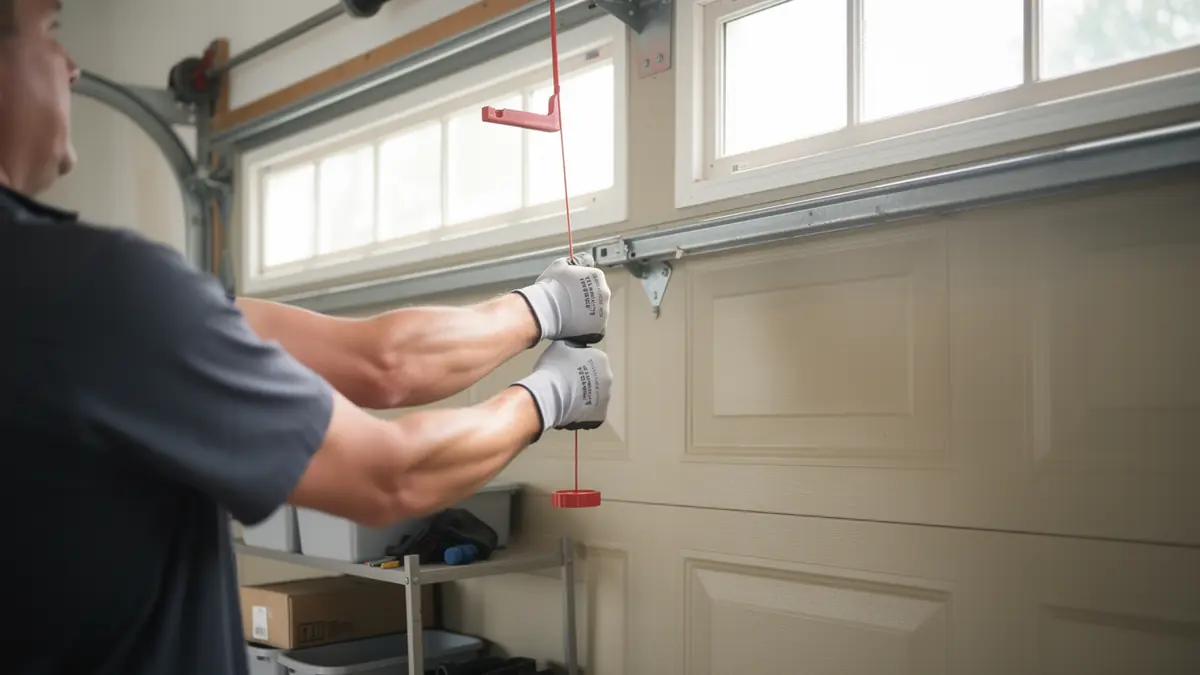
Before you call anyone, stand in the driveway and watch the door go up and down once. Listen for grinding, popping, or a bang partway through the cycle. Look at the tracks for dents or gaps where the rollers ride loose. Pull the release cord with the door closed and lift it by hand a foot off the ground, then let go. A balanced door should sit there; if it drops or jumps up, the spring is doing less work than it used to, and that's common on doors original to houses built in the 1980s or 90s, which make up most of the stock we see from Southside to Fultondale. Check the weatherstrip at the bottom for cracking or stiffness, since cold snaps dry that rubber out faster than people expect. Wipe a rag along the bottom roller bracket and see if it comes back rust-colored, which tells you moisture has been sitting there. None of this fixes anything, but it tells a tech what to look at first instead of starting from zero when the truck pulls up.
Leaving It Alone
Torsion springs are the one thing we ask people not to touch. They're wound under enough tension to break a wrist or worse, and on a door original to a house from the 1957-2007 build range, that spring has been doing its job quietly for years with no sign it's near the end until the day it isn't. Don't loosen the set screws on the winding cone, don't try to adjust the tension yourself, and don't assume a quiet spring is a fine spring. We also won't tell you to re-tension a spring over the phone, even if you describe the exact setup, because we haven't seen the hardware and a bad guess there isn't a small mistake. If the door won't move and the spring looks coiled wrong or sits open at a gap, stop opening and closing it by remote and leave it until someone looks at it in person.
The Problem
Most of the garage doors we open here went up between 1957 and 2007, with the bulk of that stock dating to the 1980s and 90s, which is the era covered across the 40 named areas we work in, from Hoover to Tarrant to Pleasant Grove. That means a lot of original steel sections on hardware nobody stocks new anymore, plain-bearing rollers instead of sealed ball bearings, and springs sized for a lighter, uninsulated door even on homes where someone swapped in a heavier insulated one later without upgrading the spring to match. That mismatch is one of the most common things we find: a door that's harder to lift than it should be, an opener straining on every cycle, and a motor gear wearing out faster because it's fighting a spring that was never sized for the door it's lifting. We don't always recommend replacing the spring alone in that case. If the door itself is near the end of its life, putting a new spring on an old panel is money that would've gone further toward a full door.
How Local Conditions Play In
Birmingham sits in a cold-moderate climate band, not the deep freeze further north but enough swing between winter mornings and afternoon sun that steel expands and contracts more than people assume. A door installed when houses in Mountain Brook or Vestavia Hills were going up in the 1980s is old enough now that the spring has likely outlived its rated cycle count, and cold mornings are when that shows up, because stiff lubricant and contracted metal put more load on a spring that's already tired. A west-facing driveway in Forestdale or Graysville sees the opposite problem in summer: afternoon heat softens old weatherstrip and can warp a thin steel panel slightly at the bottom corner, which is often where we find the first signs of a seal failing. None of this means the door is about to fail tomorrow. It means the seasonal swing here is the thing that finds the weak point in an already aging system faster than it would somewhere with less temperature change.
Questions
Common questions
How old does a garage door need to be before I should worry about the spring?
It's less about age on the calendar and more about cycle count, but given that most of the housing stock here dates from the 1980s and 90s, a door that's never had the spring replaced is well past the point where we'd want to inspect it. If you don't know the install date, we check the date code stamped on the spring itself.
Can I just add oil to a noisy door myself?
A light coating of lithium grease on the rollers and hinges is fine and worth doing. What we don't recommend is spraying anything on the torsion spring itself expecting it to quiet down long-term; by the time a spring is making noise, lubricant is usually masking a wear problem, not fixing it.
Why does my door seem harder to open in cold weather?
Cold contracts the metal and stiffens old lubricant, which puts more strain on a spring that's already doing less work than it used to. On a door original to an older build in this climate band, that seasonal swing is often what exposes a spring near the end of its life rather than causing new damage on its own.
Recommendation
You Might Also Like
More garage door guides for Birmingham homeowners.
 What to Know Before Buying a Replacement Garage Door in Birmingham
A look at when a Birmingham garage door is past fixing, tied to the area's 1957-2007 housing stock, cold-moderate climate, and what it costs to replace instead of patch.
 When the Cold Snaps and the Spring Goes With It
Why Birmingham's 1980s housing stock and cold-moderate winters put extra strain on garage door springs, what to check yourself, and when to call it in.
 When the Power Goes Out, What Your Opener Can and Can't Do
How Birmingham's 1980s-era housing stock and cold-moderate winters affect garage door openers during power outages, and what to check before you call.
Ready when you are
Need a garage door sorted in Birmingham?
Birmingham Garage Door Pros repairs and installs garage doors, springs and openers in Birmingham, AL and the surrounding area.