Blog
When a Garage Door in Birmingham Still Has Life Left
A look at when a Birmingham garage door built in the 1960s-90s housing boom is worth repairing versus replacing, tied to local housing age, climate, and household numbers.
Checking It Yourself
Most of the houses we see calls from in the Birmingham area went up somewhere between 1957 and 2007, with the bulk of that stock dating to the 1980s and 90s. That matters because a door from that era is old enough to show real wear but often not so old it's a lost cause.
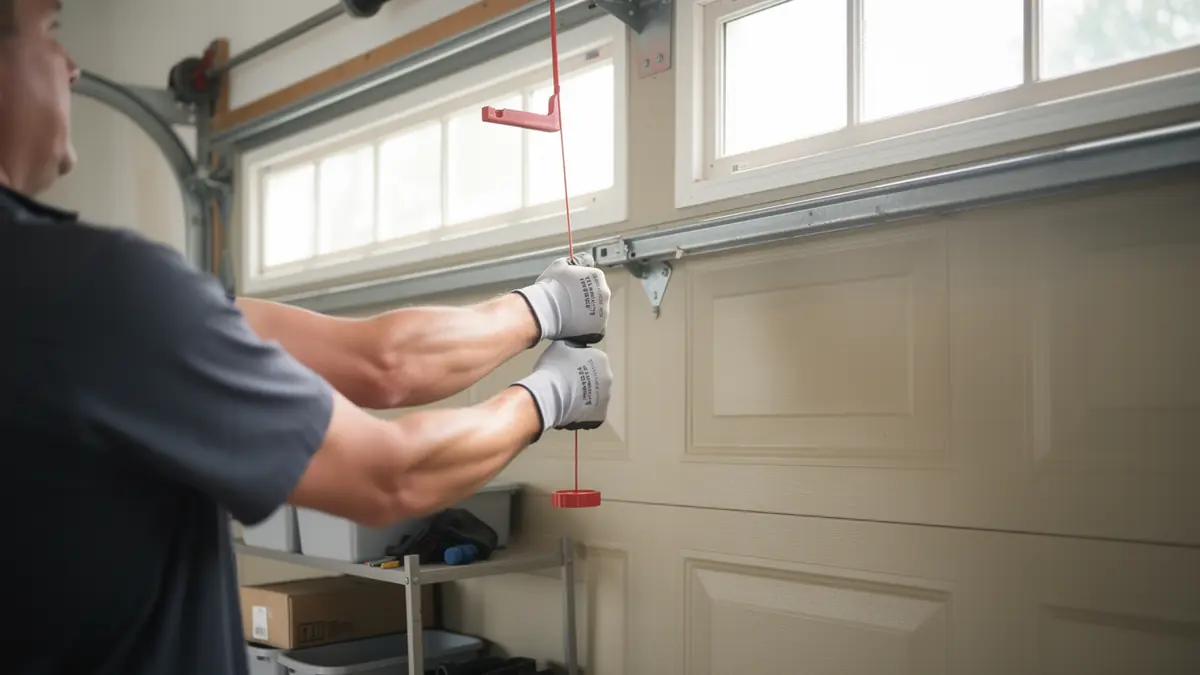
Start with the balance test: disconnect the opener, lift the door halfway by hand, and let go. It should hold. If it drops or shoots up, the spring tension is off and that's not a DIY fix. Next, look at the rollers - metal rollers from a 1980s build often grind or chip after decades of use, and that's a cheap swap. Check the weatherstripping at the bottom panel too. On a house from this era, original stripping is usually brittle, cracked, or missing outright, and it's one of the easiest things to replace yourself with a trip to the hardware store.
Look at the track brackets while you're at it. Loose lag bolts are common on houses this age, and tightening them is safe to do with the door down and the opener unplugged. None of this requires touching the spring system.
Leaving It Alone
The torsion spring and the cables running alongside it are the one part of an older Birmingham garage door you should not touch yourself, no matter how straightforward it looks. These springs hold enough tension to cause a serious injury if they let go while you're working on them, and on a door built decades ago, the spring has likely never been replaced and is well past its rated cycle count.
Same goes for the opener's internal gears if the unit predates digital force sensors - which, on a house built in the 1960s through 80s, is common. Adjusting force settings without knowing what you're doing can mean a door that doesn't reverse when it should.
We'll also say plainly: if a panel is bent badly enough to pull the track out of alignment, don't keep running the opener to "see if it still works." That's how a $150 track repair turns into a $600 opener replacement.
The Problem
A door installed when the house was built in, say, 1980 is now well past the point where most of its original hardware was designed to last. Springs are typically rated for a number of open-close cycles, not years, but a door that age has usually seen tens of thousands of cycles - more if the house has had the same family in it the whole time.
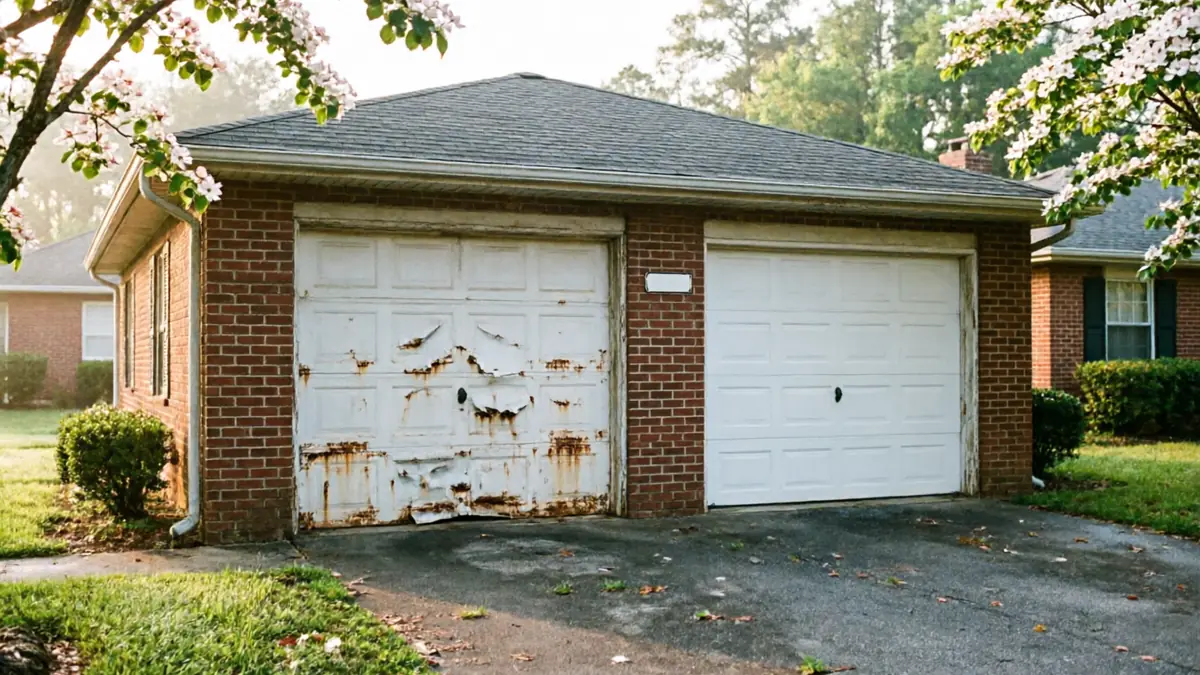
The real decision point isn't age alone, it's condition. A steel panel from that era with surface rust but a straight frame and intact seams is often worth fixing - new rollers, new spring, new weatherstripping, and it's good for another stretch. A panel that's buckled, delaminated, or has a cracked seam at the hinge points is a different story. At that point you're patching a door that's going to keep failing at the same spot.
With a median household income of $74,943 across the service area, most owners we talk to are weighing a repair bill against a full replacement cost seriously, not treating either as pocket change. That's a fair way to look at it - we'd rather tell you a repair will hold than sell you a door you didn't need.
How Local Conditions Play In
Birmingham sits in a cold-moderate climate band - not the deep freeze-thaw cycling that cracks steel seams further north, but enough seasonal swing to loosen weatherstripping, dry out old lubricant on rollers and hinges, and warp thinner panels over years of use. On a door that's 30-plus years old, that slow seasonal flexing is often what finally opens a seam that was already weak.
Across the roughly 122,308 owner-occupied houses in this service area, a large share are still running the opener and spring that came with the house, especially in the older pockets closer to downtown like Southside and Fountain Heights, where housing predates a lot of the newer builds further out. That doesn't mean every old door is a problem - plenty of them have been maintained and are fine. It just means age plus local weather swings is the combination worth checking before you assume a sticking door just needs a new remote battery.
Questions
Common questions
How do I know if my garage door is too old to fix?
Look at the panel and the frame, not just the age. If the steel is straight, the seams are intact, and it's mainly rollers, springs, or weatherstripping that have worn out, it's usually worth fixing. If the panel is bent, the track is pulled out of square, or rust has eaten through a seam, replacement is the more honest answer.
My door is original to a house built in the 1980s - should I be worried?
Not automatically. A lot of doors from that era are still structurally sound; what usually fails first is the spring, rollers, and weatherstripping, all of which are straightforward repairs. We'd check the panel condition and the spring's tension before recommending anything bigger.
Can I replace the spring myself to save money?
We'd advise against it. A torsion spring holds enough stored tension to cause serious injury if it releases while you're working near it, and on an older door the cable and drum are often worn too. It's one job we think is worth paying someone for.
Do you match the exact panel color on an older door?
Not always off the truck. If a panel needs replacing and the original color or finish isn't a stock item anymore, it sometimes means a special order and a short wait rather than a same-day fix.
Recommendation
You Might Also Like
More garage door guides for Birmingham homeowners.
 What We Actually Do on a Service Call in Birmingham
A look at what a Birmingham Garage Door Pros service call actually includes, built around the age of local housing stock and the area's cold-moderate winters.
What to Know Before Buying a Replacement Garage Door in Birmingham
A look at when a Birmingham garage door is past fixing, tied to the area's 1957-2007 housing stock, cold-moderate climate, and what it costs to replace instead of patch.
 What We Look For Before We Touch Your Door
A look at what a Birmingham garage door tech checks first, tied to the 1980s housing stock and cold winters that strain springs and tracks here in town.
Ready when you are
Need a garage door sorted in Birmingham?
Birmingham Garage Door Pros repairs and installs garage doors, springs and openers in Birmingham, AL and the surrounding area.