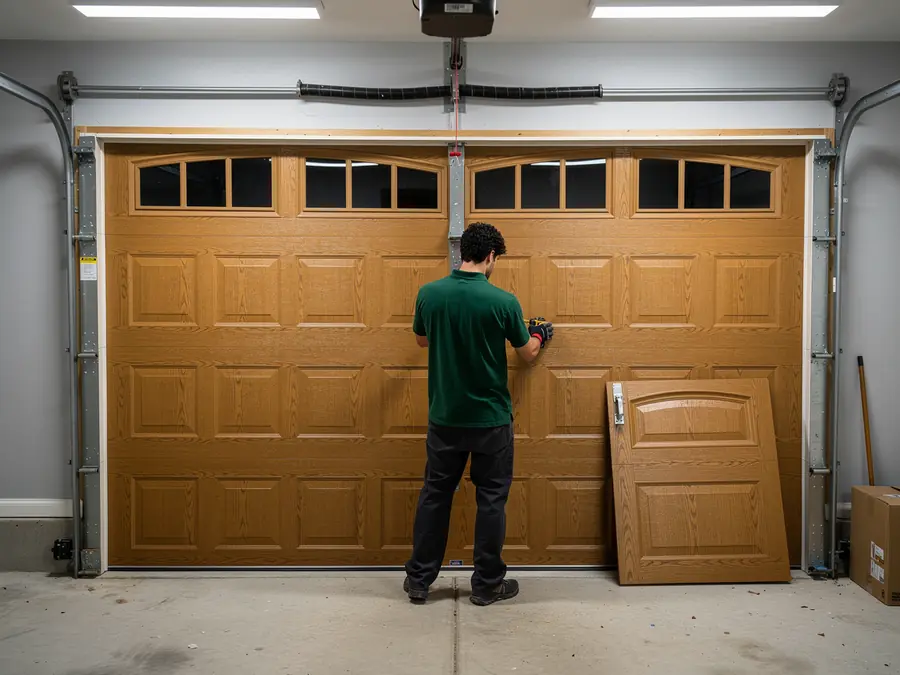
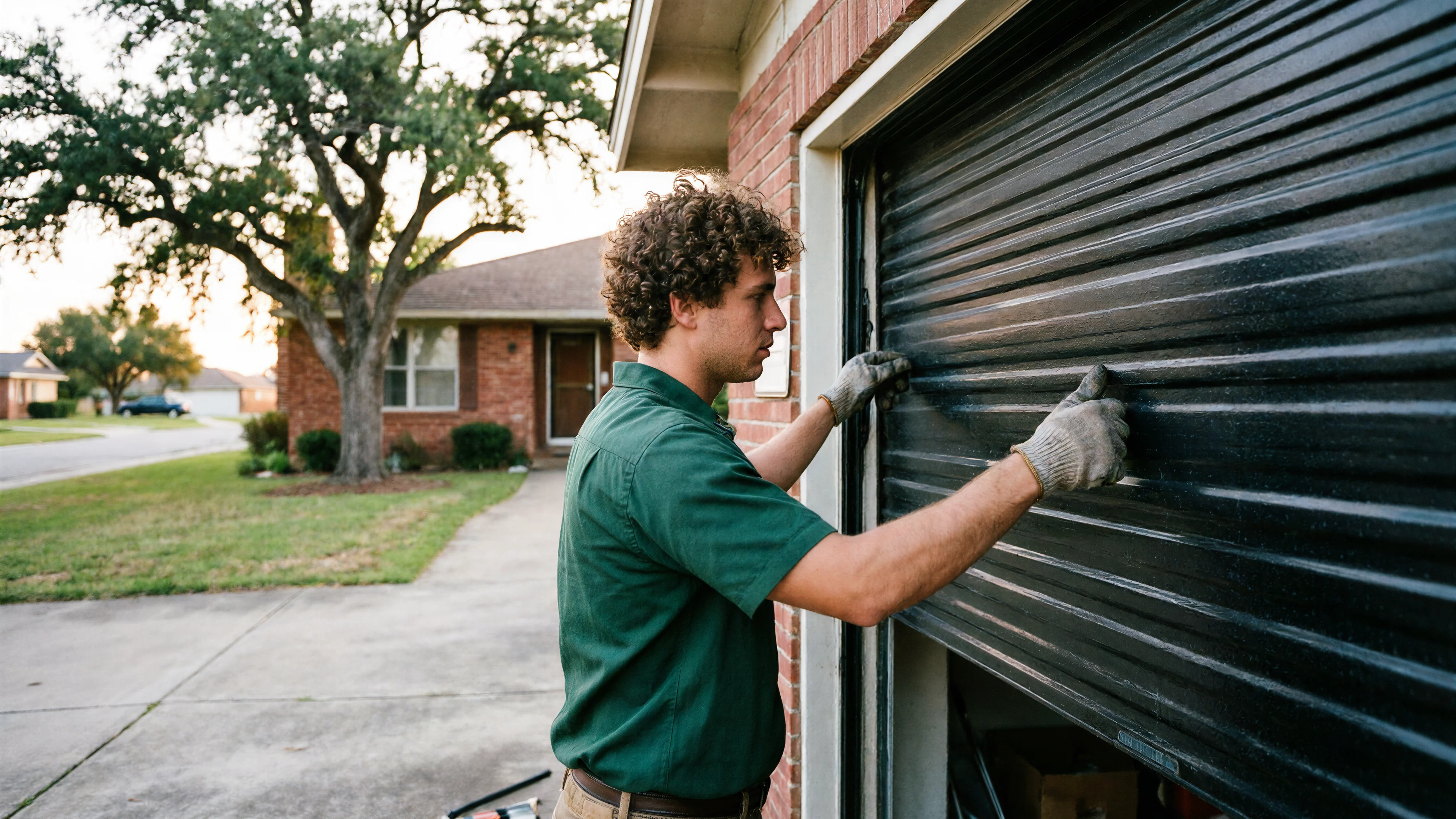
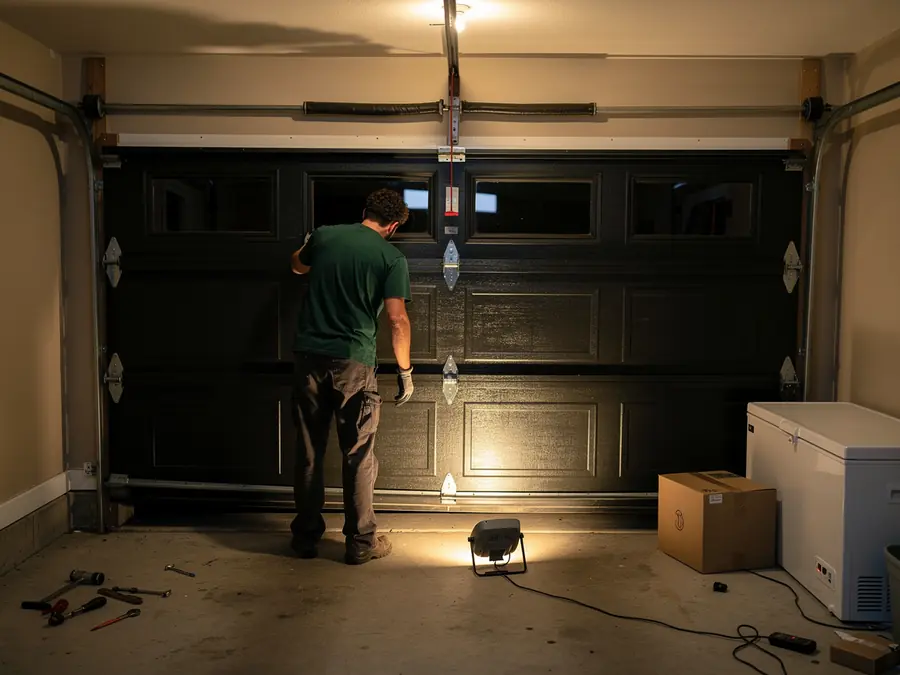
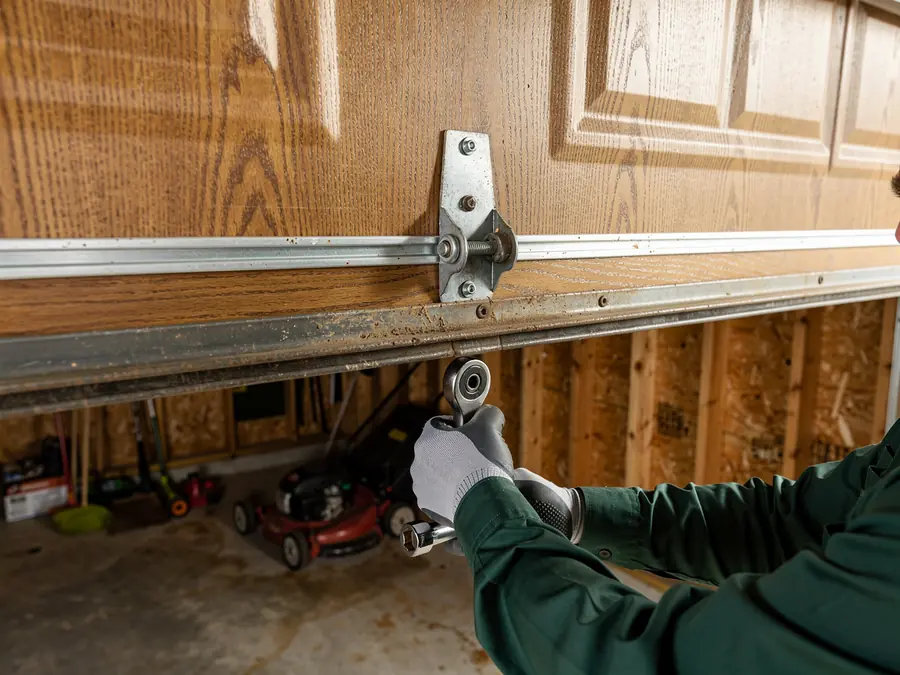
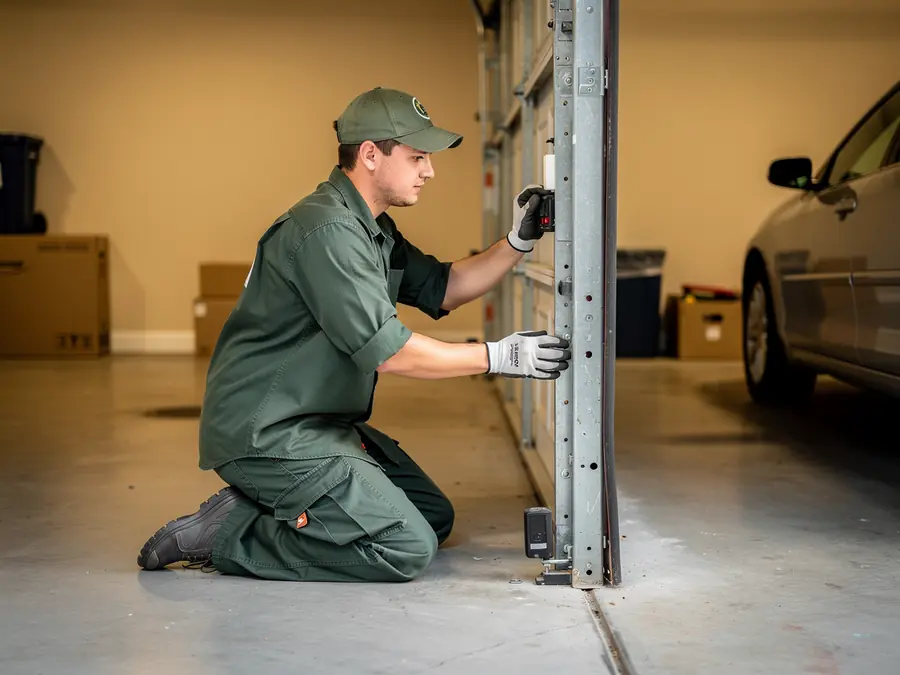
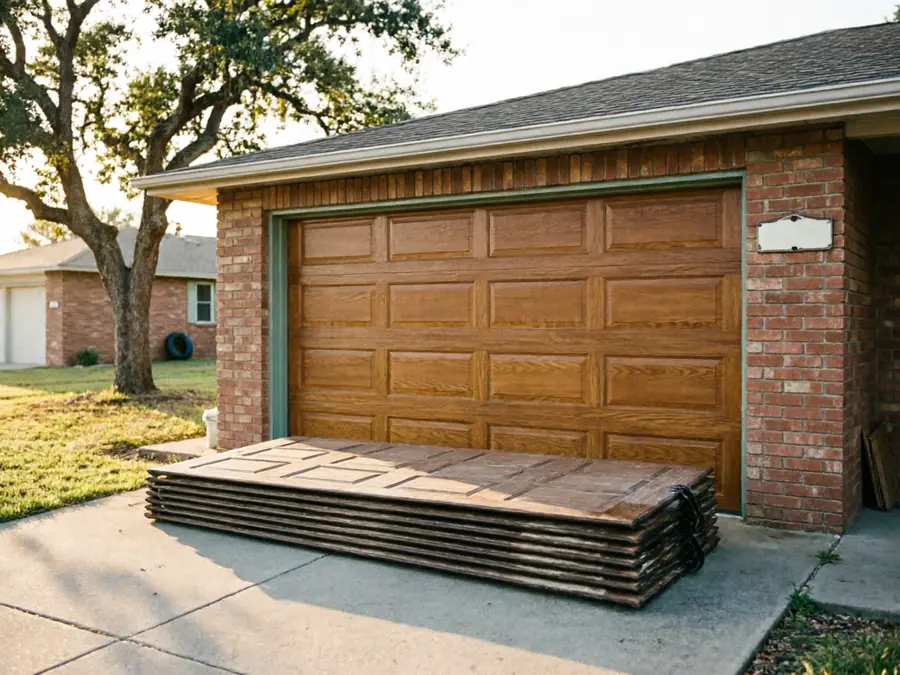
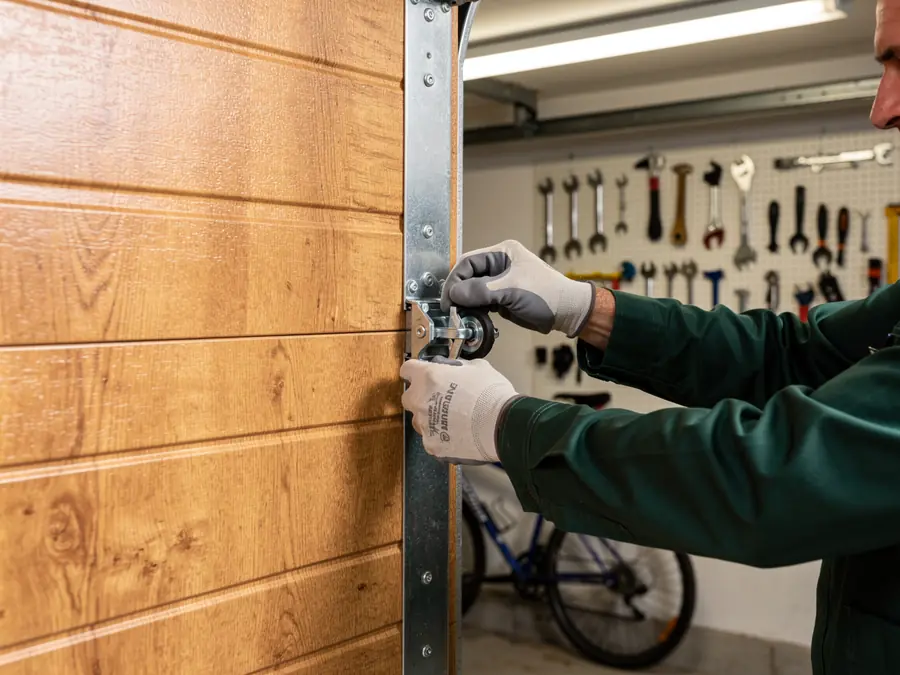
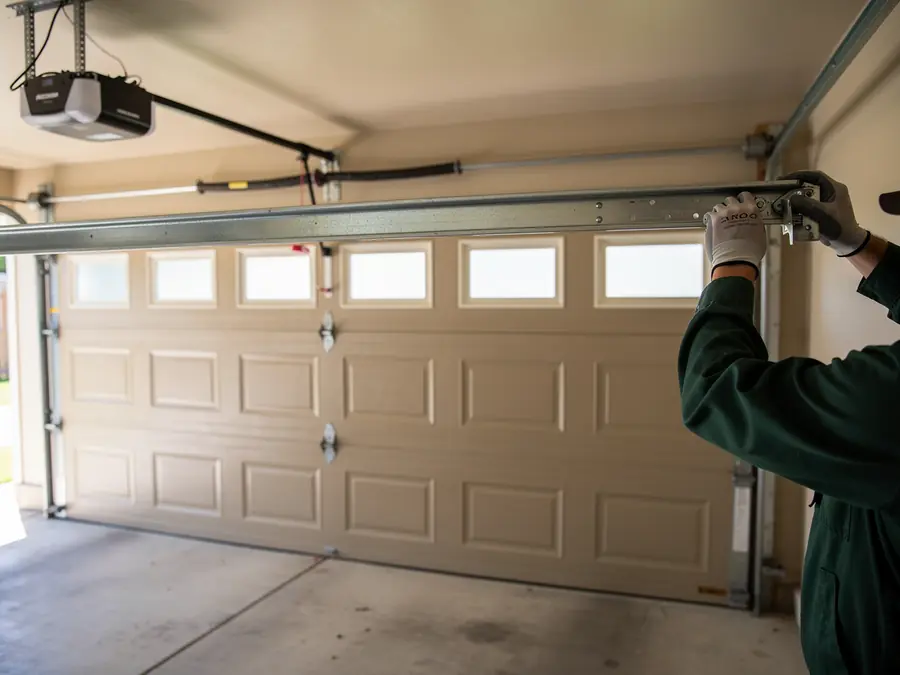
The failure in Gardendale isn't the same one you'd see on a 1957-built door closer to Birmingham's core. Those older doors are often one-piece or heavy-gauge sectional units on simple hardware. Gardendale's 1990-era doors are lighter steel with foam-filled cores, and the foam bond between the steel skins is what gives out first - usually from a car bumper tap or a basketball, not from age. Once that bond separates, the panel bows, and a bowed panel throws off the roller alignment in the track even when the rest of the door looks fine.
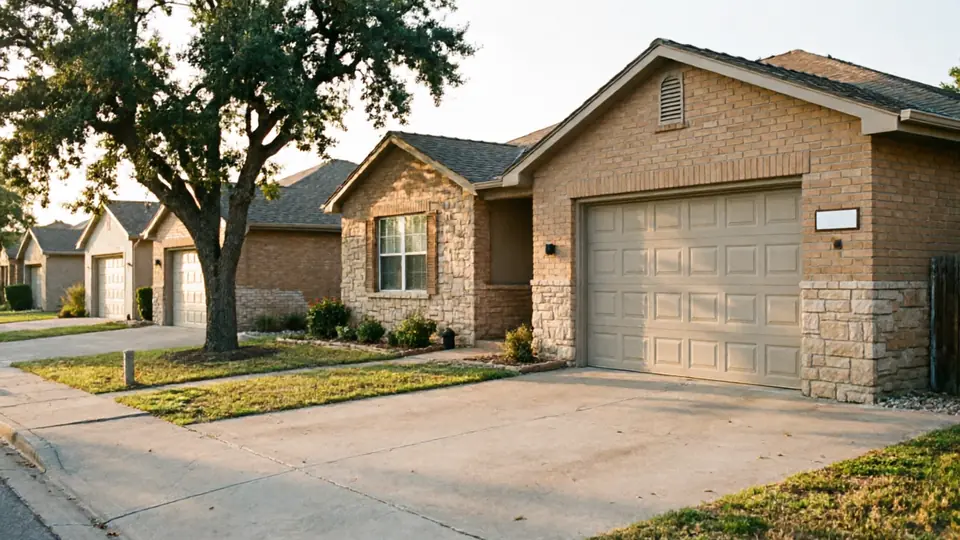
At $81,215 median household income, most owners here are replacing the door to keep the house looking sharp for resale or refinance appraisal, not because the whole system failed. That changes the job: it's a cosmetic-driven panel swap on hardware that's otherwise sound, which means color and panel-style matching matters more here than torque specs. Across roughly 6,256 households in Gardendale, that 1990 build year is consistent enough that we see the same foam-core failure pattern house after house - it's not a one-off.